



 © International Clan MacFarlane Society • Red Rubber Media/Diana MacFarlane
 © International Clan MacFarlane Society, Inc. - Royal Publishing, Inc.
 © MacFarlane.org
 https://www.macfarlane.org/wp-content/uploads/2024/12/The-Banning-Of-Christmas-In-Scotland.jpg
563
1000
Diana MacFarlane
https://www.macfarlane.org/wp-content/uploads/2017/06/header-logo-6.png
Diana MacFarlane2024-12-17 19:08:402024-12-17 19:08:40The Banning of Christmas in Scotland
Scottish history California
History & Heritage
How Glen Ellen Got Its Name: Scottish Roots in California Wine Country
A Reason to Look Closer
Every Clan MacFarlane World Gathering gives us a reason to look a little closer at the ground we’re standing on. This September, for example, the Clan gathers in the San Francisco Bay Area for our 2026 World Gathering & AGM, and our itinerary includes a winemaker’s lunch in the village of Glen Ellen. The story behind that name is a perfect example of something we love uncovering: the quiet, often-overlooked Scottish threads woven into American history.
Scots, after all, didn’t just visit California. Instead, they built ferries and cable cars, dug the water systems that made Gold Rush mining possible, founded towns, planted vineyards, and helped write the state’s laws. Long before any of us pack a kilt for the Bay Area, our people were already here, and so were countless other Scots and MacFarlane-name families who quietly shaped the American West. Because of that, this post is the first in a short series exploring those connections, starting with a valley whose name is a love letter written in Gaelic.
A Colonel’s Tribute, Written in Gaelic
 A Long Road to Sonoma Valley
In 1859, a California pioneer named Colonel Charles V. Stuart bought land in Sonoma County’s Sonoma Valley. Before that, the land had passed through Mexican land grants and earlier owners following the Mexican-American War. Stuart himself had crossed the country in 1849 as part of the Gold Rush migration, then spent roughly a decade building a life in San Francisco before moving his family north to what the Pomo and Coast Miwok peoples had long called the “Valley of the Moon.”
Naming the Valley
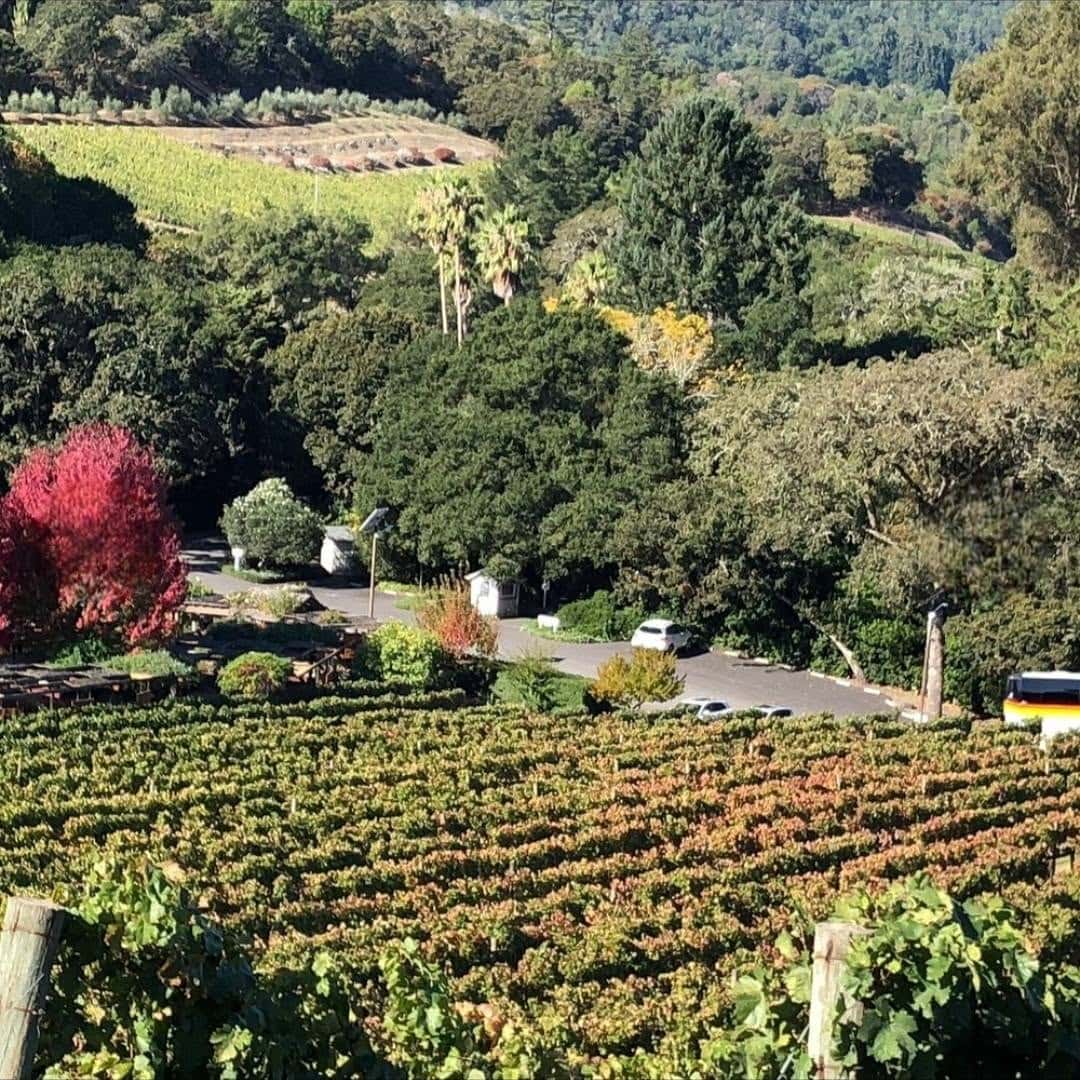
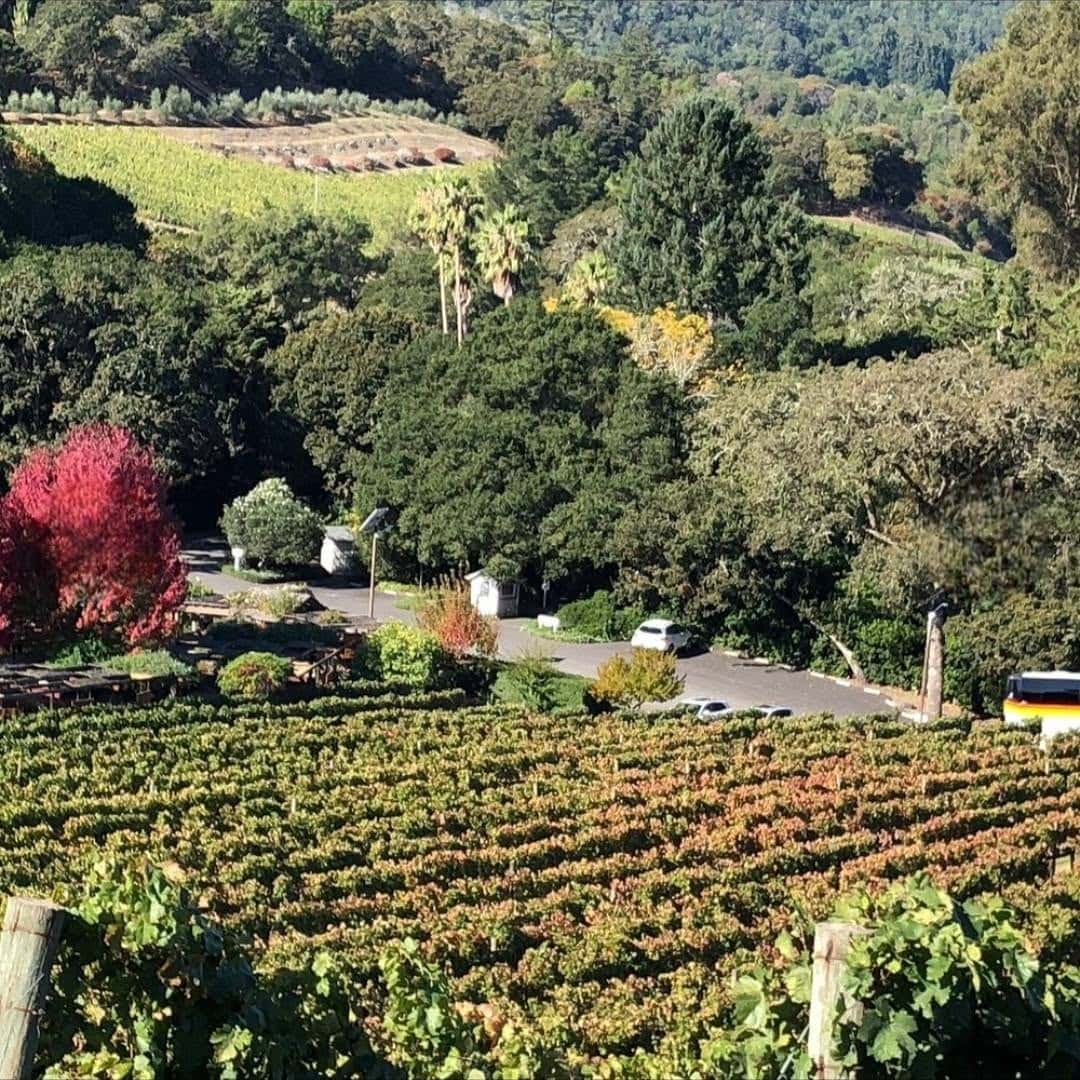
By 1868, Stuart began building a home on the property, and he soon established what would become a 1,000-acre vineyard and ranch. Eventually, he named the property Glen Ellen, combining “glen,” the Scots Gaelic word for a secluded valley, with the name of his wife, Ellen Stuart, whom he had married back east in 1842.
As families settled around the Stuart estate, the growing community took the same name. However, when the local post office was officially established under the name “Glen Ellen” in the early 1870s, Stuart renamed his own ranch Glen Oaks to avoid confusing his private property with the public township. That distinction still holds today. Notably, the Stuart family home still stands near the intersection of Arnold Drive and Highway 12, and it’s now listed on the National Register of Historic Places.
A Voice for Fairness
Stuart’s story carries a footnote worth remembering, too. When California held its second constitutional convention in 1878–79, Stuart was one of the few delegates to speak out publicly against discriminatory legislation targeting Chinese immigrants. In short, it’s a reminder that the people who shaped California’s landscape also shaped, in ways large and small, its conscience.
 The Widow Who Kept the Vineyard Running
After Stuart’s death in 1880, Ellen Stuart didn’t step back from the vineyard; instead, she ran it herself. Alongside two other widows, she petitioned the Sonoma County Superior Court for status as a “sole trader,” the legal designation women needed at the time to operate a business independently in California. In other words, it’s a small but striking example of Scottish-American women shaping the region just as directly as their husbands did.
Glen Ellen Today
Today, Glen Ellen is known for its wineries, its ties to author Jack London, and its postcard-perfect Wine Country charm. Yet its name is, quite literally, a Scottish word for valley: a linguistic fingerprint left by one immigrant family that has outlasted the family itself by more than a century.
The MacFarlane Name, Written Across the American West
Glen Ellen isn’t the only place in California carrying Scottish roots in its name. In fact, some of that history belongs directly to our own name, in its many historic spellings.
From Stirlingshire to the Gold Fields
In Sacramento County, the town of Galt exists largely because of a Scottish-born MacFarlane. Specifically, John McFarland was born in Stirlingshire, Scotland, in 1823, and his parents spelled the family name “McFarlane” before it shifted in North America. Sadly, the family’s 1834 crossing to Canada was marked by tragedy: McFarland’s mother and two younger brothers died of cholera within days of arriving. Still, young John trained as a carpenter and machinist, then headed west in 1850 to try his luck in the Gold Rush.
According to family lore, he arrived in Placerville that August with two dollars in his pocket, and little more than tattered shoes and a worn pair of trousers to his name.
Fortune in Water, Not Gold
McFarland never struck it rich panning for gold. Instead, he spotted an opportunity that Gold Rush California desperately needed: water. So, he organised a crew to dig a sixteen-mile water ditch through rugged terrain, supplying mining claims and charging miners for access. Later, he built even larger water systems, including a fifty-mile ditch from Mokelumne Hill to Placerville. In the end, it was the water business, not gold itself, that made his fortune.
Founding Galt
With that fortune, McFarland bought roughly 3,500 acres in the Sacramento Valley during the 1850s. When the railroad came through, town officials asked him to name the new stop, and he chose Galt, after a town in Canada where his family had once lived. Afterwards, McFarland funded the town’s first church and store, served two decades as a school trustee, and built the two-storey ranch home that still stands today as a living history museum run by the Galt Area Historical Society.
A Second McFarland Town
Further south in Kern County, another McFarland put down roots of his own. Namely, James Boyd McFarland, an Ohio schoolteacher turned California land developer, founded the agricultural town that still bears the family name: McFarland, California, laying out the townsite in the years just before 1910. Between them, these two unrelated McFarland families put the name on the map twice over in a single state, a reminder of just how many branches of our clan’s name spread out across the American frontier, often independently of one another and long before anyone was tracing genealogy for a Highland Games tent.
Scots All Along the Bay: The Threads Beneath Our 2026 Gathering
Zoom out from Sonoma and Sacramento, and the same pattern holds across the very ground our 2026 World Gathering will cover.
The Cable Car Connection
San Francisco’s cable cars, the ones we’ll ride during our self-guided waterfront tour, exist because of Andrew Smith Hallidie. His father, for instance, was born in Dumfriesshire, Scotland, and the family came west during the Gold Rush to work mining claims. While hauling ore out of California mines, Hallidie developed cable-and-wire-rope expertise that later became the technology behind San Francisco’s famous cable cars, letting them climb hills horses simply couldn’t manage. As a result, those cars are protected today as National Historic Landmarks.
John Muir’s California
A short drive north, meanwhile, the Muir House in Martinez preserves the legacy of John Muir. Born in Dunbar, Scotland, in 1838, Muir emigrated to Wisconsin as a boy and later made California, and its wild places, his life’s work. Thanks to his advocacy, Yosemite became a national park, and the Sierra Club was founded soon after — work that still shapes how the whole country thinks about conservation.
A Pattern Worth Noticing
None of these men knew each other, and none of them set out to “represent” Scotland in California. Instead, they were immigrants building lives, solving practical problems, and, once in a while, naming a town after someone they loved. Taken together, though, their stories tell us something important: Scottish immigrants weren’t a footnote in the settling of California and the American West. Rather, they were engineers of it, quite literally, through wire rope, water ditches, vineyards, and place names that survive to this day.
Why This Matters for Clan MacFarlane
An American Half of Our Story
Our Society exists to preserve Gaelic-Scottish history and heritage, and increasingly, that means telling the American half of that story, not just the Highland half. When we gather in the Bay Area this September for the 2026 Clan MacFarlane World Gathering & AGM, we won’t just be visiting California. Rather, we’ll be walking through places our extended Scottish family, including MacFarlanes and McFarlands under a dozen different spellings, helped build.
A Toast to a Small Story
So, when the group settles in for the winemaker’s lunch at Poppy in Glen Ellen this September, paired with hand-selected MacLaren wines, take a moment to consider the valley’s name. It’s a nineteenth-century husband’s tribute to his wife, written in the language of the old country, still marking the land more than 165 years later. On its own, admittedly, it’s a small story. Multiplied across a continent, though, it’s exactly the kind of story that shows how deeply Scotland is stitched into the fabric of the American West.
Ready to be part of it? Learn more about the 2026 Clan MacFarlane World Gathering or join Clan MacFarlane to register.
2026 World Gathering American West Andrew Smith Hallidie California History Charles V. Stuart Clan MacFarlane Clan Septs Galt California Glen Ellen Gold Rush History John McFarland John Muir McFarland California San Francisco Cable Cars Scottish Diaspora Scottish Heritage Scottish history Scottish Immigrants Sierra Club Sonoma County History Sonoma Valley Wine Country History
 How Glen Ellen Got Its Name: The Scottish Roots Hidden in...July 7, 2026 - 5:37 pm
- Clan MacFarlane 2026 Annual World GatheringApril 27, 2026 - 9:00 am
- Clan MacFarlane Named Honoured Clan at the 2025 Wisconsin...August 26, 2025 - 9:53 am
- Meet Commissioner To Tennessee Sara MacfarlaneAugust 18, 2025 - 8:46 pm
- Meet Commissioner To Tennessee Bowen PartonJune 3, 2025 - 7:59 pm
- 2019 AGM & TOUR OF MACFARLANE HOMELANDSJanuary 22, 2019 - 10:00 am
- Commissioners! Let Us Know What You’d Like To See...October 5, 2018 - 1:51 pm
- Coos For Your Tent!March 6, 2019 - 8:46 am
- Changing Social Media Post PolicyMarch 15, 2019 - 11:40 am
- Meet New Clan MacFarlane Executive Director Diana MacFa...June 10, 2023 - 2:56 pm
 Hi. My son is interested in his a Clan heritage and would...April 28, 2026 - 6:37 am by Marisa Moazen
- Sara.
Missed seeing you, looking forward to seeing you...April 11, 2026 - 9:46 am by Megan Webster
- Hi Jody! Can't wait to meet you - will you be at Middle...August 29, 2025 - 7:20 am by SARA MACFARLANE
- Hi - fellow Tennessean here also in East TNAugust 22, 2025 - 1:20 pm by Jody Zorsch
- Excellent prose!November 16, 2023 - 1:34 pm by Kendall T. Rogers II
AGM
Alba
Ancestry
Arrochar
Bagpipe Bands
bagpipes
books
Caber Toss
Celtic Music
Clan History
Clan MacFarlane
Clan MacFarlane History
Clan Parade
Clans
Clan Tent
Commissioners
Culture
Gaelic language
Gatherings
Genealogy
Genealogy Research
Haggis
Heavy Athletics
Heritage
Highland Dance
Highland Games
History.
Hospitality Tent
ICMS
International Clan MacFarlane Society
Kilt
kilts
Loch Lomond
Loch Sloy
News
Scotland
Scots
Scottish
Scottish Country Dance
Scottish Fare
Scottish Festival
Scottish history
Scottish Merchandise
Single Malt
Tarbet
tartan
the Caber Toss
The Scottish Banner
The Sheaf Toss
Whisky
Latest Merchandise
-
Clan MacFarlane 50th World Gathering & AGM Limited Edition Commemorative T-shirt
$30.00
-
© International Clan MacFarlane Society • Red Rubber Media/Diana MacFarlane MacFarlane Cattle Company Soft Enamel Pin
$12.00
-
© International Clan MacFarlane Society, Inc. - Royal Publishing, Inc. International Clan Macfarlane Society - Trifold Color Brochures (250)
$0.00
Upcoming Gatherings
Our next gathering starts in…
History & Heritage
How Glen Ellen Got Its Name: Scottish Roots in California Wine Country
A Reason to Look Closer
Every Clan MacFarlane World Gathering gives us a reason to look a little closer at the ground we’re standing on. This September, for example, the Clan gathers in the San Francisco Bay Area for our 2026 World Gathering & AGM, and our itinerary includes a winemaker’s lunch in the village of Glen Ellen. The story behind that name is a perfect example of something we love uncovering: the quiet, often-overlooked Scottish threads woven into American history.
Scots, after all, didn’t just visit California. Instead, they built ferries and cable cars, dug the water systems that made Gold Rush mining possible, founded towns, planted vineyards, and helped write the state’s laws. Long before any of us pack a kilt for the Bay Area, our people were already here, and so were countless other Scots and MacFarlane-name families who quietly shaped the American West. Because of that, this post is the first in a short series exploring those connections, starting with a valley whose name is a love letter written in Gaelic.
A Colonel’s Tribute, Written in Gaelic
A Long Road to Sonoma Valley
In 1859, a California pioneer named Colonel Charles V. Stuart bought land in Sonoma County’s Sonoma Valley. Before that, the land had passed through Mexican land grants and earlier owners following the Mexican-American War. Stuart himself had crossed the country in 1849 as part of the Gold Rush migration, then spent roughly a decade building a life in San Francisco before moving his family north to what the Pomo and Coast Miwok peoples had long called the “Valley of the Moon.”
Naming the Valley
By 1868, Stuart began building a home on the property, and he soon established what would become a 1,000-acre vineyard and ranch. Eventually, he named the property Glen Ellen, combining “glen,” the Scots Gaelic word for a secluded valley, with the name of his wife, Ellen Stuart, whom he had married back east in 1842.
As families settled around the Stuart estate, the growing community took the same name. However, when the local post office was officially established under the name “Glen Ellen” in the early 1870s, Stuart renamed his own ranch Glen Oaks to avoid confusing his private property with the public township. That distinction still holds today. Notably, the Stuart family home still stands near the intersection of Arnold Drive and Highway 12, and it’s now listed on the National Register of Historic Places.
A Voice for Fairness
Stuart’s story carries a footnote worth remembering, too. When California held its second constitutional convention in 1878–79, Stuart was one of the few delegates to speak out publicly against discriminatory legislation targeting Chinese immigrants. In short, it’s a reminder that the people who shaped California’s landscape also shaped, in ways large and small, its conscience.
The Widow Who Kept the Vineyard Running
After Stuart’s death in 1880, Ellen Stuart didn’t step back from the vineyard; instead, she ran it herself. Alongside two other widows, she petitioned the Sonoma County Superior Court for status as a “sole trader,” the legal designation women needed at the time to operate a business independently in California. In other words, it’s a small but striking example of Scottish-American women shaping the region just as directly as their husbands did.
Glen Ellen Today
Today, Glen Ellen is known for its wineries, its ties to author Jack London, and its postcard-perfect Wine Country charm. Yet its name is, quite literally, a Scottish word for valley: a linguistic fingerprint left by one immigrant family that has outlasted the family itself by more than a century.
The MacFarlane Name, Written Across the American West
Glen Ellen isn’t the only place in California carrying Scottish roots in its name. In fact, some of that history belongs directly to our own name, in its many historic spellings.
From Stirlingshire to the Gold Fields
In Sacramento County, the town of Galt exists largely because of a Scottish-born MacFarlane. Specifically, John McFarland was born in Stirlingshire, Scotland, in 1823, and his parents spelled the family name “McFarlane” before it shifted in North America. Sadly, the family’s 1834 crossing to Canada was marked by tragedy: McFarland’s mother and two younger brothers died of cholera within days of arriving. Still, young John trained as a carpenter and machinist, then headed west in 1850 to try his luck in the Gold Rush.
According to family lore, he arrived in Placerville that August with two dollars in his pocket, and little more than tattered shoes and a worn pair of trousers to his name.
Fortune in Water, Not Gold
McFarland never struck it rich panning for gold. Instead, he spotted an opportunity that Gold Rush California desperately needed: water. So, he organised a crew to dig a sixteen-mile water ditch through rugged terrain, supplying mining claims and charging miners for access. Later, he built even larger water systems, including a fifty-mile ditch from Mokelumne Hill to Placerville. In the end, it was the water business, not gold itself, that made his fortune.
Founding Galt
With that fortune, McFarland bought roughly 3,500 acres in the Sacramento Valley during the 1850s. When the railroad came through, town officials asked him to name the new stop, and he chose Galt, after a town in Canada where his family had once lived. Afterwards, McFarland funded the town’s first church and store, served two decades as a school trustee, and built the two-storey ranch home that still stands today as a living history museum run by the Galt Area Historical Society.
A Second McFarland Town
Further south in Kern County, another McFarland put down roots of his own. Namely, James Boyd McFarland, an Ohio schoolteacher turned California land developer, founded the agricultural town that still bears the family name: McFarland, California, laying out the townsite in the years just before 1910. Between them, these two unrelated McFarland families put the name on the map twice over in a single state, a reminder of just how many branches of our clan’s name spread out across the American frontier, often independently of one another and long before anyone was tracing genealogy for a Highland Games tent.
Scots All Along the Bay: The Threads Beneath Our 2026 Gathering
Zoom out from Sonoma and Sacramento, and the same pattern holds across the very ground our 2026 World Gathering will cover.
The Cable Car Connection
San Francisco’s cable cars, the ones we’ll ride during our self-guided waterfront tour, exist because of Andrew Smith Hallidie. His father, for instance, was born in Dumfriesshire, Scotland, and the family came west during the Gold Rush to work mining claims. While hauling ore out of California mines, Hallidie developed cable-and-wire-rope expertise that later became the technology behind San Francisco’s famous cable cars, letting them climb hills horses simply couldn’t manage. As a result, those cars are protected today as National Historic Landmarks.
John Muir’s California
A short drive north, meanwhile, the Muir House in Martinez preserves the legacy of John Muir. Born in Dunbar, Scotland, in 1838, Muir emigrated to Wisconsin as a boy and later made California, and its wild places, his life’s work. Thanks to his advocacy, Yosemite became a national park, and the Sierra Club was founded soon after — work that still shapes how the whole country thinks about conservation.
A Pattern Worth Noticing
None of these men knew each other, and none of them set out to “represent” Scotland in California. Instead, they were immigrants building lives, solving practical problems, and, once in a while, naming a town after someone they loved. Taken together, though, their stories tell us something important: Scottish immigrants weren’t a footnote in the settling of California and the American West. Rather, they were engineers of it, quite literally, through wire rope, water ditches, vineyards, and place names that survive to this day.
Why This Matters for Clan MacFarlane
An American Half of Our Story
Our Society exists to preserve Gaelic-Scottish history and heritage, and increasingly, that means telling the American half of that story, not just the Highland half. When we gather in the Bay Area this September for the 2026 Clan MacFarlane World Gathering & AGM, we won’t just be visiting California. Rather, we’ll be walking through places our extended Scottish family, including MacFarlanes and McFarlands under a dozen different spellings, helped build.
A Toast to a Small Story
So, when the group settles in for the winemaker’s lunch at Poppy in Glen Ellen this September, paired with hand-selected MacLaren wines, take a moment to consider the valley’s name. It’s a nineteenth-century husband’s tribute to his wife, written in the language of the old country, still marking the land more than 165 years later. On its own, admittedly, it’s a small story. Multiplied across a continent, though, it’s exactly the kind of story that shows how deeply Scotland is stitched into the fabric of the American West.
Ready to be part of it? Learn more about the 2026 Clan MacFarlane World Gathering or join Clan MacFarlane to register.
2026 World Gathering American West Andrew Smith Hallidie California History Charles V. Stuart Clan MacFarlane Clan Septs Galt California Glen Ellen Gold Rush History John McFarland John Muir McFarland California San Francisco Cable Cars Scottish Diaspora Scottish Heritage Scottish history Scottish Immigrants Sierra Club Sonoma County History Sonoma Valley Wine Country History
Leave a Reply
Want to join the discussion?Feel free to contribute!
Leave a Reply
You must be logged in to post a comment.
- How Glen Ellen Got Its Name: The Scottish Roots Hidden in...July 7, 2026 - 5:37 pm
- Clan MacFarlane 2026 Annual World GatheringApril 27, 2026 - 9:00 am
- Clan MacFarlane Named Honoured Clan at the 2025 Wisconsin...August 26, 2025 - 9:53 am
- Meet Commissioner To Tennessee Sara MacfarlaneAugust 18, 2025 - 8:46 pm
- Meet Commissioner To Tennessee Bowen PartonJune 3, 2025 - 7:59 pm
- 2019 AGM & TOUR OF MACFARLANE HOMELANDSJanuary 22, 2019 - 10:00 am
- Commissioners! Let Us Know What You’d Like To See...October 5, 2018 - 1:51 pm
- Coos For Your Tent!March 6, 2019 - 8:46 am
- Changing Social Media Post PolicyMarch 15, 2019 - 11:40 am
- Meet New Clan MacFarlane Executive Director Diana MacFa...June 10, 2023 - 2:56 pm
- Hi. My son is interested in his a Clan heritage and would...April 28, 2026 - 6:37 am by Marisa Moazen
- Sara.
Missed seeing you, looking forward to seeing you...April 11, 2026 - 9:46 am by Megan Webster
- Hi Jody! Can't wait to meet you - will you be at Middle...August 29, 2025 - 7:20 am by SARA MACFARLANE
- Hi - fellow Tennessean here also in East TNAugust 22, 2025 - 1:20 pm by Jody Zorsch
- Excellent prose!November 16, 2023 - 1:34 pm by Kendall T. Rogers II
AGM
Alba
Ancestry
Arrochar
Bagpipe Bands
bagpipes
books
Caber Toss
Celtic Music
Clan History
Clan MacFarlane
Clan MacFarlane History
Clan Parade
Clans
Clan Tent
Commissioners
Culture
Gaelic language
Gatherings
Genealogy
Genealogy Research
Haggis
Heavy Athletics
Heritage
Highland Dance
Highland Games
History.
Hospitality Tent
ICMS
International Clan MacFarlane Society
Kilt
kilts
Loch Lomond
Loch Sloy
News
Scotland
Scots
Scottish
Scottish Country Dance
Scottish Fare
Scottish Festival
Scottish history
Scottish Merchandise
Single Malt
Tarbet
tartan
the Caber Toss
The Scottish Banner
The Sheaf Toss
Whisky
Latest Merchandise
-
Clan MacFarlane 50th World Gathering & AGM Limited Edition Commemorative T-shirt
$30.00
-
© International Clan MacFarlane Society • Red Rubber Media/Diana MacFarlane MacFarlane Cattle Company Soft Enamel Pin
$12.00
-
© International Clan MacFarlane Society, Inc. - Royal Publishing, Inc. International Clan Macfarlane Society - Trifold Color Brochures (250)
$0.00
Upcoming Gatherings
Our next gathering starts in…
Related Posts
https://www.macfarlane.org/wp-content/uploads/2024/12/The-Banning-Of-Christmas-In-Scotland.jpg
563
1000
Diana MacFarlane
https://www.macfarlane.org/wp-content/uploads/2017/06/header-logo-6.png
Diana MacFarlane2024-12-17 19:08:402024-12-17 19:08:40The Banning of Christmas in Scotland https://www.macfarlane.org/wp-content/uploads/2024/02/robert-burns-and-frederick-douglass.jpg
563
1000
Diana MacFarlane
https://www.macfarlane.org/wp-content/uploads/2017/06/header-logo-6.png
Diana MacFarlane2024-02-10 15:19:332024-02-10 17:55:15From Ayrshire to Abolition: Robert Burns and Frederick Douglass
 https://www.macfarlane.org/wp-content/uploads/2022/10/Halloween-turnips.jpg
489
900
Michael MacFarlane, FSA Scot
https://www.macfarlane.org/wp-content/uploads/2017/06/header-logo-6.png
Michael MacFarlane, FSA Scot2023-10-26 08:00:412023-10-27 11:57:03Samhain And The Origin Of The Jack O’ Lantern
 https://www.macfarlane.org/wp-content/uploads/2023/10/gravestone.jpg
1000
750
Diana MacFarlane
https://www.macfarlane.org/wp-content/uploads/2017/06/header-logo-6.png
Diana MacFarlane2023-10-22 13:09:572023-10-22 13:13:13MacFarlane: A Poem by Rebecca Lever
ARTICLES & FEATURES
- How Glen Ellen Got Its Name: The Scottish Roots Hidden in California Wine CountryJuly 7, 2026 - 5:37 pm
- Clan MacFarlane Named Honoured Clan at the 2025 Wisconsin Highland GamesAugust 26, 2025 - 9:53 am
- Meet Commissioner To Tennessee Sara MacfarlaneAugust 18, 2025 - 8:46 pm
LATEST NEWS
- Clan MacFarlane 2026 Annual World GatheringApril 27, 2026 - 9:00 am
- Clan MacFarlane 2025 Annual World GatheringFebruary 10, 2025 - 7:52 pm
- The Scottish Banner | January 2024November 27, 2024 - 11:40 am


GEAR UP TO SUPPORT THE CLAN!
-
Clan MacFarlane 50th World Gathering & AGM Limited Edition Commemorative T-shirt
$30.00
-
© International Clan MacFarlane Society • Red Rubber Media/Diana MacFarlane MacFarlane Cattle Company Soft Enamel Pin
$12.00
-
© International Clan MacFarlane Society, Inc. - Royal Publishing, Inc. International Clan Macfarlane Society - Trifold Color Brochures (250)
$0.00
-
© 2018 International Clan MacFarlane Society, Inc. - Royal Publishing, Inc. International Clan MacFarlane Society Business Cards
Price range: $41.00 through $65.00
-
© 2018 International Clan MacFarlane Society, Inc. - Royal Publishing, Inc. Clan MacFarlane Retractable Banners with Stands
$239.99
 © 2018 International Clan MacFarlane Society, Inc. - Royal Publishing, Inc.
 © 2018 International Clan MacFarlane Society, Inc. - Royal Publishing, Inc.
INTERNATIONAL
CLAN MACFARLANE SOCIETY, INC.
PO BOX 398
GLENDORA, CA 91740
info@macfarlane.org
The Clan MacFarlane Society, Inc., is an educational, secular, society formed to promote the perpetuation of Gaelic-Scottish culture, tradition, customs, literature, and music. It is incorporated as a non-profit organization under the U.S Internal Code 501 (c)(3). All Clan MacFarlane Society, Inc. - historical text, Macfarlanes' Lantern, archived information, and related society information © Clan MacFarlane Society, Inc. 1973-2022 are used with permission, all rights reserved.
Site is sponsored by Royal Publishing. All creative work protected by copyright. Duplication or use without permission is strictly prohibited.
© Royal Publishing, Inc.
© Royal Publishing, Inc.
Leave a Reply
Want to join the discussion?Feel free to contribute!